In the ever-evolving world of fitness, enthusiasts are constantly seeking innovative ways to challenge their bodies. The latest trend making waves in home workouts involves an unexpected household appliance – the refrigerator. This unconventional approach leverages the resistance created by refrigerator door seals to create an effective back-strengthening exercise.
How It Works
The concept capitalizes on the natural resistance provided by refrigerator door gaskets. These rubber seals create consistent tension when the door opens and closes, providing just enough resistance to engage the back muscles effectively. The exercise mimics traditional rowing motions but with the added benefit of variable resistance throughout the movement.
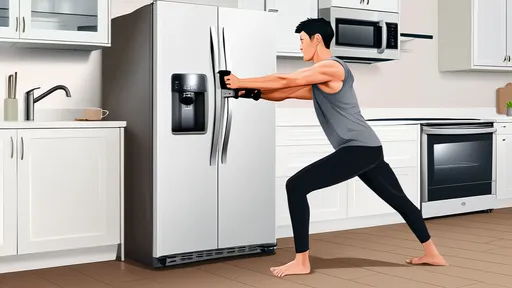
To perform the exercise, stand facing the refrigerator with feet shoulder-width apart. Grasp the door handle with both hands, keeping your arms extended. Initiate the movement by pulling the door open while squeezing your shoulder blades together. The resistance increases as the door opens wider, challenging your back muscles through a full range of motion.
The Science Behind the Method
Fitness experts explain that the refrigerator door exercise primarily targets the latissimus dorsi, rhomboids, and trapezius muscles – the same muscle groups engaged during traditional back exercises like seated rows or lat pulldowns. The unique aspect of this method lies in the progressive resistance curve. Unlike free weights that provide constant resistance, the refrigerator door offers increasing resistance as it opens further.
Physical therapists have noted that the movement pattern closely resembles functional movements we perform daily, making it particularly beneficial for improving posture and reducing back pain. The exercise strengthens the muscles responsible for proper shoulder positioning, which can alleviate strain caused by prolonged sitting or poor posture.
Safety Considerations
While this innovative workout method shows promise, experts caution users to be mindful of several factors. First, ensure your refrigerator is stable and properly anchored to prevent tipping. Second, start with partial range movements to gauge the appropriate resistance level before attempting full door openings. Third, maintain proper form throughout the exercise – keeping the core engaged and avoiding excessive shoulder elevation.
Those with pre-existing back conditions or recent injuries should consult with a healthcare professional before attempting this exercise. The resistance can be surprisingly intense, especially on newer refrigerator models with tighter seals. Beginners might consider starting with shorter sessions of 2-3 sets of 8-10 repetitions.
Unexpected Benefits
Beyond its muscle-building potential, the refrigerator door workout offers several surprising advantages. The convenience factor stands out – no gym membership or expensive equipment required. The exercise can be performed while completing another household task like grabbing a healthy snack, making it easier to incorporate into busy schedules.
Additionally, the movement provides proprioceptive benefits by challenging stability and coordination in ways that machines cannot replicate. Users report improved mind-muscle connection with their back muscles, leading to better activation during traditional workouts. Some even find the rhythmic motion meditative, turning a simple chore into a moment of mindfulness.
Variations and Progressions
As practitioners become more advanced, they can experiment with different variations to increase intensity. Changing hand positions alters muscle recruitment – a wider grip emphasizes the outer back muscles while a narrower grip targets the middle back. Adding a slight pause at the point of maximum resistance increases time under tension.
For those seeking greater challenge, some fitness enthusiasts combine the door movement with lower body exercises like squats or lunges, creating a full-body workout. Others incorporate isometric holds at various points in the range of motion to build endurance. The possibilities for customization make this adaptable to various fitness levels.
The Future of Household Fitness
This creative approach to strength training reflects a growing movement toward functional, accessible fitness solutions. As people continue to seek effective workouts that fit seamlessly into their daily lives, we may see more innovative uses of common household items for exercise purposes.
While it shouldn't replace a comprehensive strength training program, the refrigerator door workout serves as an excellent supplemental exercise or temporary solution when traditional equipment isn't available. Its simplicity and effectiveness demonstrate that sometimes the best fitness tools are right in front of us – we just need to look at them differently.
As with any new exercise regimen, consistency and proper form remain paramount. Those who incorporate this unique back workout into their routine report noticeable improvements in posture and back strength within just a few weeks. The refrigerator, once merely an appliance for food storage, has now earned its place as a versatile piece of home fitness equipment.

By /Aug 6, 2025

By /Aug 6, 2025

By /Aug 6, 2025

By /Aug 6, 2025

By /Aug 6, 2025
By /Aug 6, 2025

By /Aug 6, 2025

By /Aug 6, 2025

By /Aug 6, 2025

By /Aug 6, 2025

By /Aug 6, 2025

By /Aug 6, 2025

By /Aug 6, 2025

By /Aug 6, 2025

By /Aug 6, 2025

By /Aug 6, 2025

By /Aug 6, 2025

By /Aug 6, 2025

By /Aug 6, 2025
By /Aug 6, 2025